Reading Military History Through the Objects People Left Behind: The Details That Matter Most
4 min read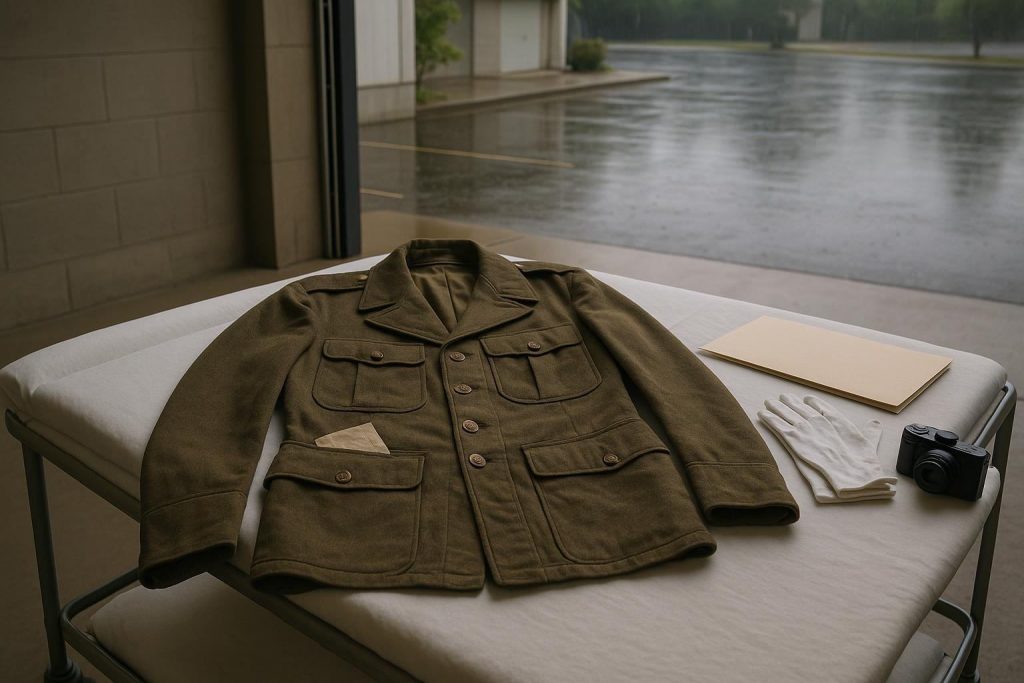
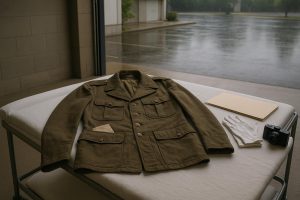
A museum worker finds a folded letter inside a service jacket, the paper softened at the creases and the envelope missing. The familiar claim arrives almost automatically: an object like this tells the whole story of the person who carried it.
That claim is attractive, and usually too large. A surviving object can preserve a choice, a habit, a relationship or a moment of use. It cannot, by itself, explain everything around that moment. The work of public history begins when we ask what the object shows, what it suggests and what the surviving record still cannot establish.
The myth of the complete story
Military history artifacts often appear more authoritative than written records because they are physical. A stamped helmet, altered uniform, devotional card or field-made souvenir seems to have arrived directly from the past, without interpretation. Yet every object has passed through selection. Someone kept it, someone stored it, someone donated it, and a museum later decided how to describe and preserve it.
That chain matters. The things that survive are not a neutral sample of everyday life. Durable materials may remain when fragile ones disappear. Sentimental belongings may be saved while routine equipment is discarded. A family may remember one dramatic episode and attach that memory to an object whose exact use cannot be verified.
The accurate claim is narrower: an object is evidence. Its meaning becomes stronger when its physical features agree with letters, photographs, service records, oral histories or other dated documents. When those sources disagree, the disagreement is not a nuisance to hide. It is part of the history.
Read the marks before the story
The first questions should be physical rather than heroic. What material is present? Which parts are original? Are there repairs, stains, initials, altered fasteners, replacement parts or cut edges? Does the wear occur where repeated handling would be expected, or is it concentrated in a way that may reflect later display or storage?
Small details can change an interpretation. A name written inside a garment may identify a user, but not necessarily the person who wore it in combat. A photograph may show a similar item, but resemblance is not proof that the photographed object and the surviving one are identical. A souvenir inscription may reveal how an event was remembered after the fact rather than what happened at the time.
Preservation can also alter appearance. Cleaning, repairs, folding, mounting and previous conservation treatments may leave their own traces. Museums therefore document condition before making claims about use. They also distinguish observation from inference: "the leather is worn at the strap" is different from "the item was carried daily." The second statement may be reasonable, but it needs support.
Personal belongings carry unequal kinds of evidence
A pocket notebook, religious medal, photograph or child's drawing can bring private life into a military narrative. These items complicate the idea that service history is only a sequence of postings, battles and ranks. They may show care, anxiety, humor, homesickness or an effort to remain connected to a family far away.
They can also invite overreading. A poem does not prove a person's complete political outlook. A gift does not reveal the entire relationship between giver and recipient. A single photograph cannot establish a timeline without corroborating details such as captions, uniforms, addresses or correspondence.
Interpreting personal belongings requires restraint as well as empathy. The goal is not to turn an unknown individual into a symbolic character. It is to let the object retain its particularity: a person made a choice, handled a thing, altered it, saved it or passed it on. That limited knowledge is still meaningful.
Context is where an object becomes public history
An isolated artifact can be compelling, but context gives it proportion. Museum interpretation may connect an item to a unit, community, conflict, workplace, household or landscape. In Western North Carolina, that broader frame can include recruitment, training, wartime labor, migration, memorial practices and the return of service members to civilian life. Such subjects should not be inferred from an object alone; they require careful research across local and wider records.
A useful object-reading check is short:
– What can be directly observed?
– What is documented by provenance or associated records?
– What is plausible but still uncertain?
– Whose perspective is missing?
– Could later handling have changed the object or its meaning?
This keeps interpretation open without making it vague. It also helps curators explain why a label may use "possibly," "identified as," or "associated with." Those qualifiers are signs of honest evidence, not weak storytelling.
What remains true after the exaggeration
The myth to retire is that every surviving object carries a complete, transparent account of the past. It does not. Objects are selective, altered and sometimes detached from the people who used them.
What remains is more valuable: material things can preserve evidence of contact between people and history. A repaired seam can show adaptation. A worn edge can indicate repeated handling. A saved letter can reveal what someone considered worth carrying forward. None of these details stands alone, yet together they can make historical experience more specific and less abstract.
That is the task shared by military museums and their audiences: not to force certainty onto incomplete remains, but to read them carefully. Preservation keeps the physical evidence available. Public history adds questions, context and transparency. The result is not a perfect reconstruction. It is a more trustworthy account of what people left behind – and of what the record still asks us to discover.